
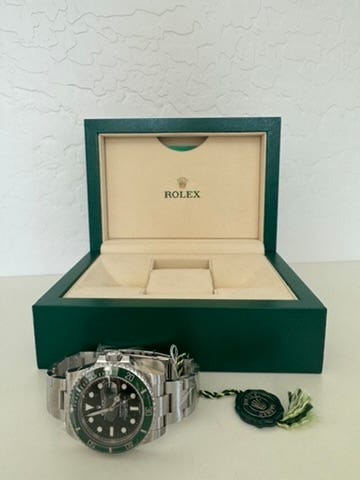
This past summer, in a small shop in Skagway, Alaska, I made a purchase that would’ve confused the old version of me.
A Rolex Submariner Hulk. $22,500. Unworn, full set, stickers still on.
And I haven’t touched it since.
Not because I regret it or can’t afford it. But because for the first time, I bought something not to use...but to hold.
That decision, and the mindset shift behind it, is what this newsletter is all about.
A Different Kind of Athlete
I’m Stephen Kelly. Former college and pro athlete. Now a husband, father, and tech sales professional, building a life that looks nothing like what I expected at 22. Maybe you can relate.
I was wired for performance. On the field, under pressure, and later in sales. When it came to money, I spent like someone who trusted the next check would always come.
Some purchases worked out. Others didn’t. But the pattern was consistent: I saw it, I wanted it, I bought it. Eventually, performance stopped being measured by a scoreboard. It became about compound results.
That’s how athletes often think about money early on. You earn it, you enjoy it, you move on. But lately, something shifted. The same discipline that once fueled performance now fuels patience.
I’m not just trying to earn anymore. I’m trying to build. Not just make good money. But make smart moves that compound over time, create optionality, and set up the next phase of life. I’m building my future on a carefully chosen stack of choices.
I still like nice things. I’m not preaching minimalism or self-denial. But I’ve started asking different questions before I pull the trigger on a big purchase.
This newsletter is where I’ll document those decisions, the logic, the mistakes, the frameworks, and the mindset shifts that come with learning to think like an investor while still living like someone who appreciates quality.
The Family Trip That Changed My Thinking
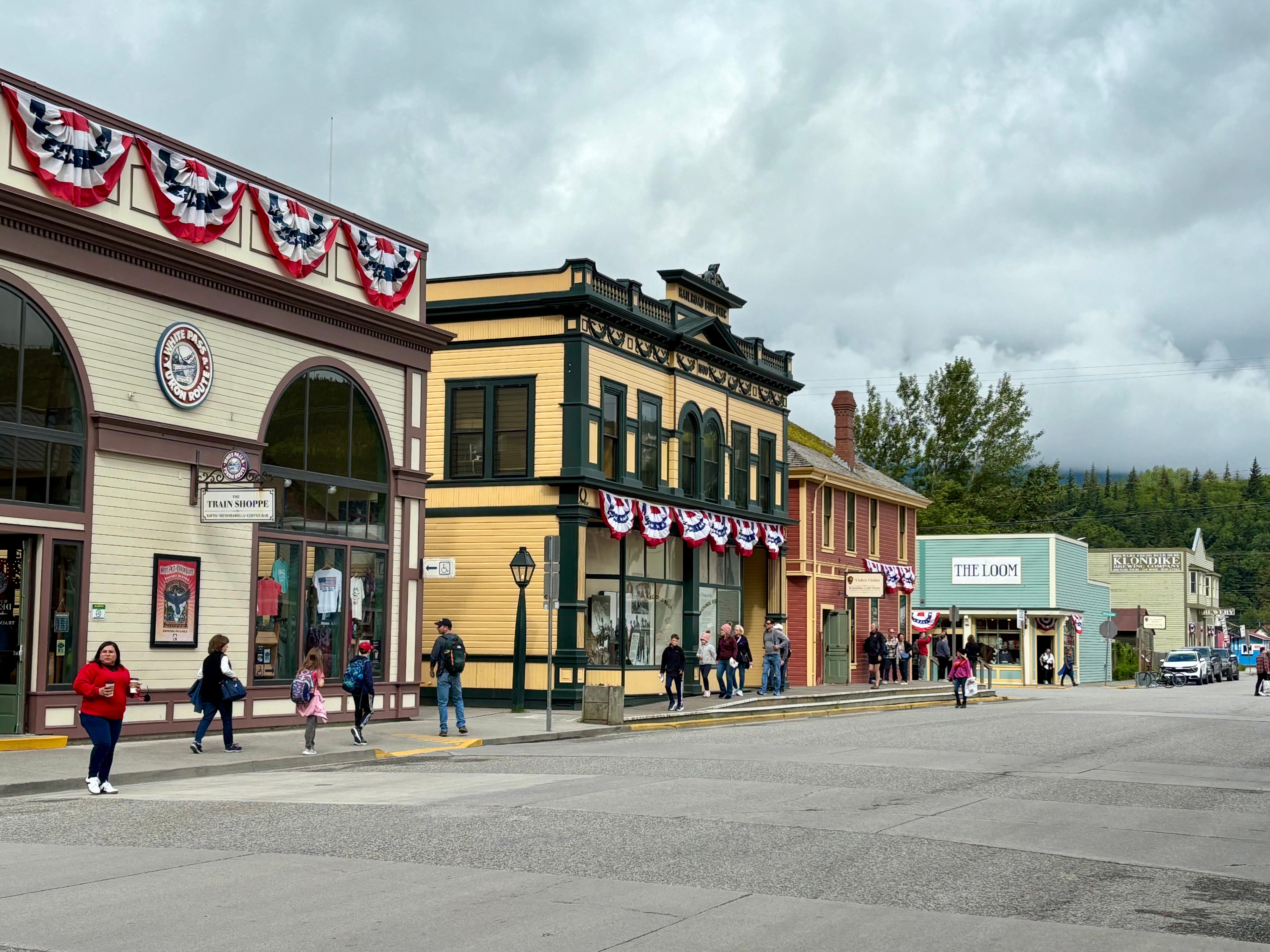
We were celebrating my parents’ 50th wedding anniversary. A Disney cruise through Alaska. My sister and her family joined us, and it was the first time we’d all traveled together like this in years.
The views were stunning, the pace slow in the best way, and the time with family irreplaceable.
We docked in Skagway, a tiny port town with more jewelry stores than restaurants. I wasn’t looking to buy anything. I was just walking, killing time before we reboarded.
Then I saw it.
A Rolex Submariner Hulk, sitting in a case. Unworn. Full set. Original stickers still on the bracelet. The shop owner was a small-time dealer, not a big-name boutique. The price was below market comps.
The old me would’ve tried it on, asked “Do I love this?” and walked out when the answer was “Not really.”
But here’s the thing. I didn’t walk out.
Instead, I started running different calculations. Asking different questions. Thinking about the math and how things added up.
Not “Would I wear this?” but “What could this become?”
Not “Do I want this?” but “Does this make sense?”
Why This Watch Makes Sense
The Rolex Submariner Hulk (Ref. 116610LV) was discontinued in 2020. Rolex hasn’t made another green-dial Sub since. That alone creates long-term value-but it’s more than just scarcity.
This watch checks every single box that serious collectors and investors look for:
Limited production window. It was only made for about a decade before being discontinued. No more are coming.
Distinctive visual identity. The green sunburst dial and matching green ceramic bezel make it instantly recognizable. It’s not just another black Sub.
Broad cultural visibility. This isn’t some obscure reference that only watch forums care about. It has mainstream awareness and appeal.
Steady price trajectory. Unlike hype-driven pieces that spike and crash, the Hulk has appreciated consistently without wild volatility. It’s not a meme stock. No, it’s a blue chip.
It was the first time I noticed data and instinct lining up this clearly.
When I saw it sitting there, priced below the $25K-$30K range I’d been tracking, I didn’t hesitate. Not because I was emotional, but because the fundamentals were aligned.
Even if the market plateaus, I don’t see a realistic downside scenario. Rolex Submariners have a long track record of holding value. Discontinued models with unique colorways? Even better.
And if I overpaid by a few thousand? Then I paid tuition for an education in alternative assets, and I got a tangible, liquid asset in return. That’s a better outcome than most financial mistakes.
What It Gives Me: Optionality
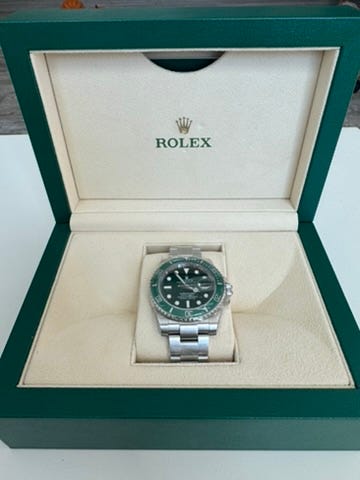
This is the first time I’ve ever bought something I don’t plan to wear.
I didn’t buy it to enjoy on my wrist. I bought it as a capital allocation decision. A way to move money into an asset that I believe will hold or appreciate in value, that I can liquidate when the right opportunity emerges without touching my retirement accounts or disrupting cash flow.
At the time of purchase, clean Hulks were trading between $25K and $30K. I came in under the top of that range. That price point gives me three clear paths forward:
If values appreciate... I sell and capture the gain. Simple.
If they hold steady... I own a stable, liquid asset with an established price floor. That’s valuable in itself.
If the right trade opportunity comes along... I can move the watch without taking a loss, using it as currency toward something else I want.
Right now, I’ve got my eye on a white gold Daytona with a meteorite dial. The Hulk won’t cover it outright, but it could fund a meaningful chunk of that purchase when timing and opportunity align.
That’s optionality. That’s what I’m building toward now. Not just spending, but building flexibility for future moves I can’t predict yet.
It’s a savings vehicle that doesn’t sit in a brokerage account. One that I can hold in my hand, that has tangible value, and that gives me options when I need them. I like knowing I can pivot when the right play appears.
Why I’m Comfortable Not Loving It
Here’s something that would’ve bothered me five years ago: I don’t even love this watch.
If I were buying a Rolex purely for personal taste, the Hulk wouldn’t be my first choice. It wouldn’t even be top three. The green dial is bold. It’s loud. It’s not what I’d naturally gravitate toward.
But that’s exactly the point.
I didn’t buy it because I loved it. I bought it because the math made sense. And it gives me options.
That gap—between personal taste and investment logic—used to feel like compromise. Now, it’s a feature. It’s a signal that I’m thinking with my investor brain instead of just my consumer instincts.
For most of my life, I only bought what I wanted to use immediately. If I didn’t love it, I didn’t buy it. That sounds principled, but it’s actually just limiting. It meant I was only ever a consumer, never an investor.
This purchase represents something bigger. It’s a sign that I’m evolving how I think about money and assets.
I’ve already built the foundation: traditional retirement accounts, cash reserves, responsible budgeting. Everything that’s smart to have. Now I’m exploring the layer above that. Alternative assets. Things that don’t show up on a spreadsheet but still hold real value, appreciate over time, and create flexibility.
The Hulk is one of my first intentional steps into this space. It’s not the last.
And if I never sell it? If the market shifts, or my plans change, or I just decide to hold it? Maybe one day I’ll pass it down to a son or daughter. That’s a different kind of return. One you can’t measure in dollars, but one that matters just as much.
What I’m Learning

This wasn’t a grail watch. It wasn’t something I’d been hunting for years, dreaming about, saving for.
But it was the right decision, made at the right time, with the right mindset.
That trip to Alaska brought my entire family together. And ended up providing the backdrop for one of my first investment decisions outside the traditional lanes of stocks, bonds, and retirement accounts.
I’m not just earning anymore. I’m building wealth. Placing capital into things that appreciate, preserve value, and create future opportunities.
I’m not chasing status or trying to impress anyone. I’m making decisions I’ll be proud of ten years from now, even if they don’t look flashy today.
Thoughtful. Patient. Intentional. Grounded.
That’s the quiet flex.
What’s Next
In future pieces, I’ll share more of the frameworks and filters I use before making big decisions. How I balance emotion, math, and meaning when the stakes are high.
This is the kind of reflection I’ll keep sharing: how intentional choices shape both wealth and meaning. If this resonated with you, hit reply and tell me about a purchase that changed how you think about money. I read every single response.
Thanks for being here.
— Stephen