
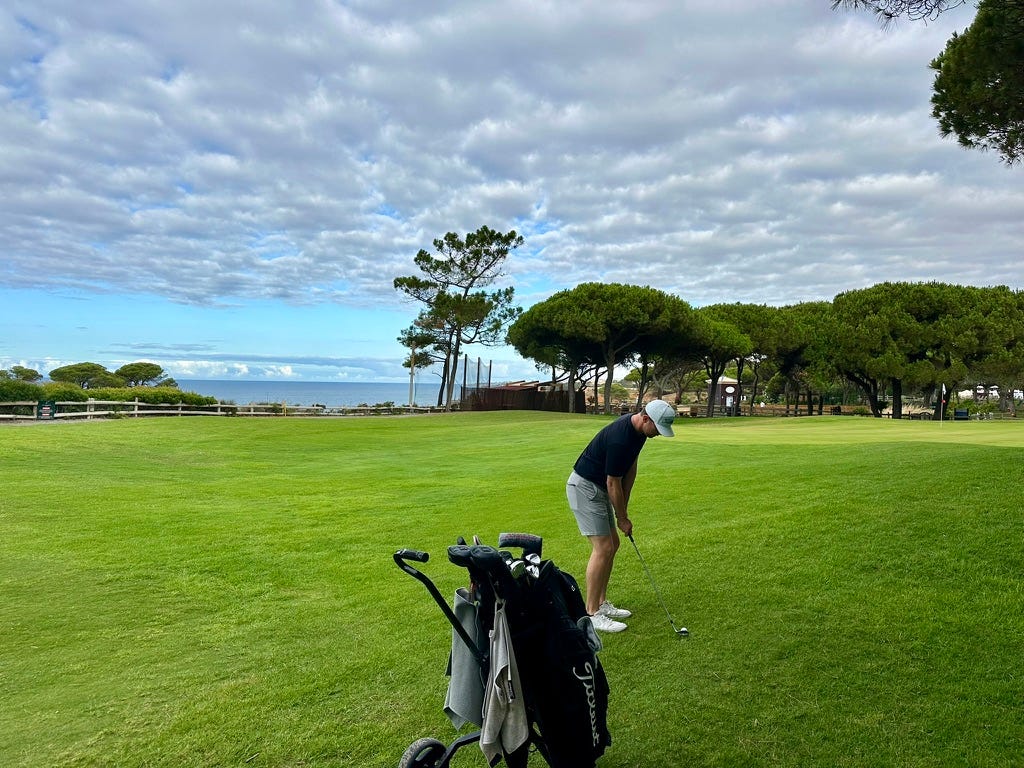
I have a $4,000 golf bag and a 20 handicap.
That’s not a flex. It’s a confession.
But it’s also the most honest reflection of where I am right now. Not just in golf, but in how I think about ambition, patience, and what it means to invest in something you’re not naturally good at.
This is a story about golf. But really, it’s about choosing to pursue something difficult for the long haul, even when the scorecard says you should quit.
Where This Fits
And while this story is about golf, it’s really part of a larger experiment — how I think about progress, mastery, and spending with intention. I just recently began documenting how I think about money, purchases, and building wealth while still living well. From the Rolex I bought to hold instead of wear, to how we approach home renovations, to family travel that balances experience with value.
I’m calling it intentional luxury, the idea that you can want nice things without being reckless, that quality matters more than quantity, and that the best purchases have both financial logic and personal meaning.
Golf fits perfectly into that framework.
It’s a sport that rewards focus, discipline, and deliberate improvement. A pursuit I can enjoy for decades. A hobby that connects to my career, my family, and the way I think about long-term investing.
And despite some truly embarrassing scores, I’ve found more value in the process than I expected.
When It Started
I started taking golf seriously in 2023.
I’d hit balls before, mostly at driving ranges during corporate outings, but I’d never really played. Like most beginners, I assumed lessons were the same as practice (they’re not), and I didn’t realize how little you retain if you’re not reinforcing with the reps between sessions.
At first, I played a couple times a week without much structure. I joined a local 9-hole league to build rhythm and consistency, but the habit fell off during summer travel. It’s something I want to restart this fall.
I’ve started watching more golf on TV. My wife enjoys it too, which is a bonus. I love that it’s a sport where you never fully “arrive.” There’s always something to work on, always a new level to chase.
The idea of a lifelong game —one I can play for decades, once beer league hockey is behind me and with pro baseball a part of my professional history —is something I’m leaning into hard.
(And yes, I said pro baseball, which sounds cool, but in reality, I played independent league, which means I definitely made more mowing lawns as a kid, but it still counts.)
But it’s also deeply, brutally humbling.
The Reality: I’m Not Good...Yet
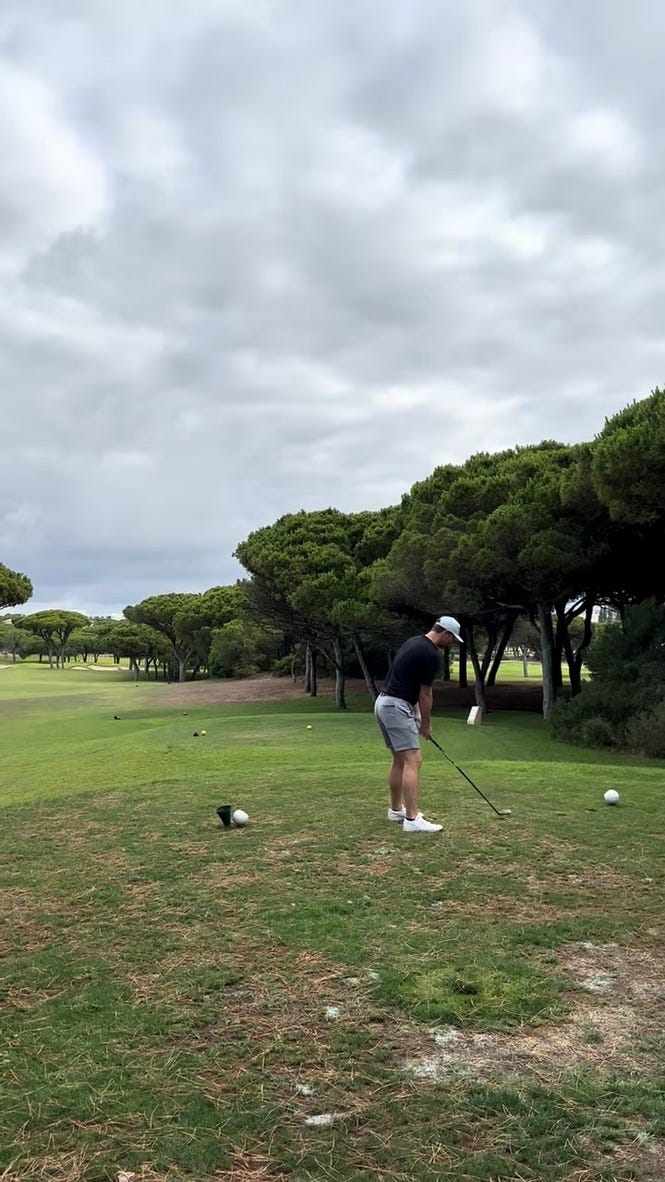
Physically, I hit the ball hard. I generate plenty of clubhead speed and ball speed, especially with the driver. When I catch it clean, I can outdrive most recreational players.
The problem? I’m only on line about half the time.
When I’m slightly off, I’m way off. Usually out of bounds. That’s why I often leave the driver in the bag and hit 3-wood off the tee. On line, I still outdrive people. But the margin for error with driver is too small right now, and my game doesn’t have the consistency to justify the risk. So, my driver and I are currently in a trial separation.
Here are the actual numbers from my recent rounds:
37% fairway accuracy. Less than 4 out of 10 drives find short grass.
25% greens in regulation. I’m only hitting 1 in 4 greens when I’m supposed to.
6.50 scoring average on par 5s. That’s more than a stroke over par, every time.
5.53 scoring average on par 4s. I’m bleeding strokes on holes I should be competitive on.
35.3 putts per round. With 16% of holes ending in 3-putts or worse.
That’s not competitive golf. That’s survival golf.
It’s humbling. Especially for someone who’s used to being good at things. I played competitive sports growing up. I was a college and pro athlete. I’m a strong athlete now. I usually pick things up quickly.
But golf exposes everything.
It’s a game of misses. Of discipline. Of mechanics and feel and mental toughness and patience. There’s no team to lean on. No ref to blame. Just you, the course, and the scorecard (and my increasing number of lost Pro V1s).
It’s not fun to have the best gear in the group and the worst score. But it’s one of the best teachers I’ve had in a long time.
Why I’m Still Playing
Part of what keeps me playing is knowing I can get better. The math says so. The swing coach says so. The data says there’s upside if I commit to the process.
But more than that, I like getting better at something hard.
I’ve also started noticing how the golf mindset bleeds into other areas of my life.
In my career, I’ve always moved fast. Quick decisions. High urgency. Instinct over analysis. That’s served me well in tech sales, where speed and confidence close deals.
But golf is teaching me the value of patience. The ability to assess conditions, course-correct mid-round, and think three shots ahead instead of just reacting to the one in front of me, all while staying present.
That’s showing up in how I invest. In how I parent. In how I approach my marriage.
The goal isn’t to “arrive” immediately. It’s to improve incrementally. To critique the process instead of just the result. To develop more self-awareness about what’s working and what’s not.
Golf is the canvas. But the lessons apply everywhere.
How This Connects to What I’m Building
This ties directly into the bigger idea I’m exploring in this newsletter.
The Stephen Kelly brand (if I can call it that) is about the thoughtful pursuit of things that matter. Things that don’t just look good on the surface but hold value, challenge you to improve, and grow with you over time.
Golf fits that model perfectly.
I didn’t buy expensive clubs because I’m good. I bought them because I’m committed to getting good. Because I believe in investing in quality tools when you’re serious about a pursuit. Because I know I’ll still be playing this game in 20 years, and I’d rather have gear that grows with me than gear I outgrow in two seasons.
That’s the same logic behind the Rolex I bought to hold. The same logic behind upgrading our home thoughtfully instead of all at once. The same logic behind choosing experiences over stuff when we travel as a family.
It’s not about spending for status. It’s about aligning purchases with long-term intent.
Where I Want to Go
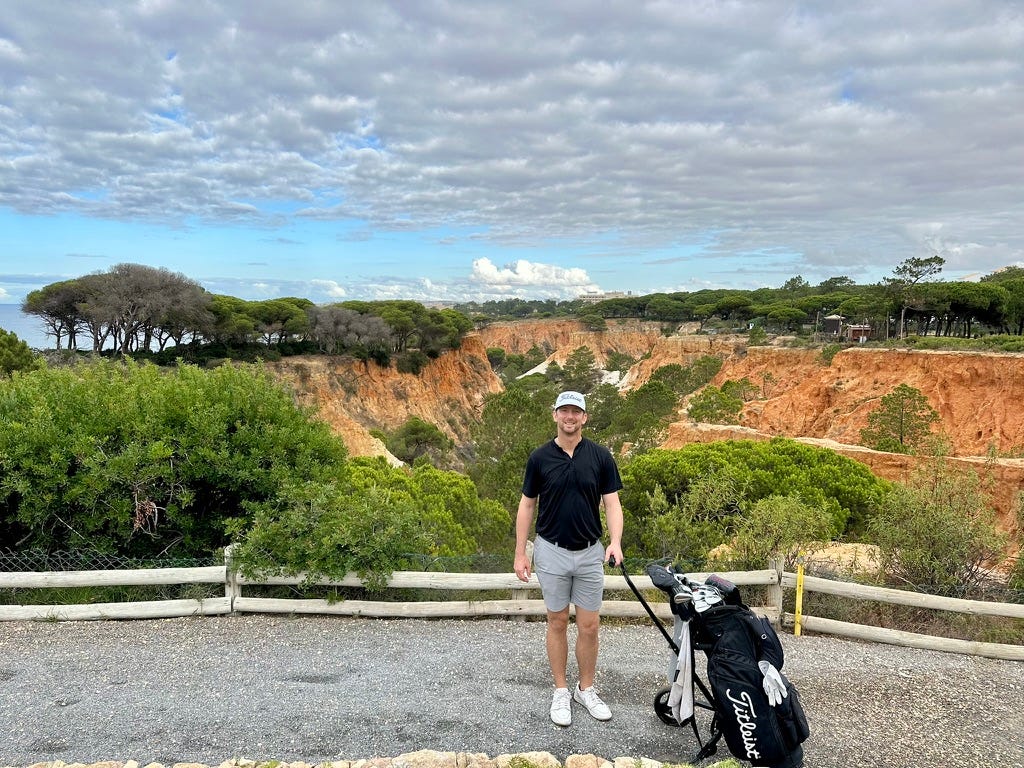
I’d love to get my handicap under 5.
I don’t have the habits yet to make that realistic in the next six months. But I have the intent. And intent paired with consistent action is a powerful force.
I’m learning the game. Learning how to approach it. The same elements that serve me in business and life serve me here: curiosity, ambition, and humility.
Focusing on the long term. Having a vision of where you want to go, even if you don’t yet know exactly how to get there. And the grit to keep showing up when progress is slow.
That’s the part I’m most interested in. Not the equipment. Not the flex of posting a good round. But the grind of building something from the ground up when you’re starting behind.
The Unexpected Joy of the Obsession
One of the best parts of golf is how it sneaks into your life.
You start seeing swing planes in your kitchen. Practicing grips while you’re standing in the grocery line. Watching putter reviews on YouTube like they’re movie trailers.
There was a Golf Galaxy commercial a few years back that nailed it—people shadow-swinging everywhere. At their desk. In the parking lot. On the couch. That’s exactly how it feels.
It’s become an outlet. A hobby with edges to sand down. A challenge with no finish line.
And there’s something freeing about that. I’m not under pressure to master it in a year. I can grow into it. Improve slowly. Maybe one day teach my kids. Maybe use it to connect with clients. Maybe just unplug completely for four hours and chase a little white ball around a perfectly manicured piece of land.
And while I’m still chasing pars—and trying to convince myself I don’t need another putter—I’m grateful for what it’s already added to my life.
Golf started as a hobby, but it’s quietly become a framework for how I think about growth — slow, deliberate, and rewarding.
A Few Questions I’m Asking
Where else could this mindset apply? What other areas of life reward patience, long-term thinking, and incremental improvement?
What are you trying to get better at? Not what you’re already good at—what are you building from scratch?
What are you building long-term? What pursuits are you committed to for the next 10+ years, regardless of how fast you progress?
What am I missing? If you’re a golfer, what advice would you give someone in my position? If you’re not, what’s your version of this?
Hit reply if this resonated, or if you just want to talk Titleist vs. PXG.
— Stephen
It’s those 2-3 perfect shots each round that keep us coming back for me