

I used to think intellectual honesty was about admitting when you’re wrong. That’s part of it, but it’s not the hard part.
The hard part is catching yourself in the middle of being wrong and having the courage to change direction. Not after the deal falls through. Not after the relationship fractures. Not after you’ve already bought the thing you didn’t need. In the moment, when it still matters.
That kind of honesty costs something. It costs the version of yourself you’ve been defending. And most of us aren’t willing to pay that price until we have no other choice.
I learned this the expensive way.
The Deal I Thought Was Locked
A few years ago, I lost a major deal after delivering what I still think was one of the best presentations of my career.
The story was sharp. The delivery was on point. The room felt engaged, impressed, even optimistic. For a moment, I thought I’d nailed the Hollywood close. The kind where everything clicks, and people break into spontaneous applause.
But that wasn’t how it went.
That’s not how it works.
“Sorry, we don’t do things that way, this doesn’t work for us.”
They said, “No.”
When the meeting ended, and my team loaded into the Uber heading to the airport, no one said a word. My boss sat beside me. Our EVP, who reports directly to the CEO, was in front. No anger. No analysis. Just quiet. The kind that fills every inch of space.
Here’s what I failed to recognize throughout the entire deal-shaping process: the small mismatches the customer architect and I had quietly ignored were actually big rocks blocking the path forward. What looked aligned in the room wasn’t aligned in reality.
The idea was mine, not the customer’s. They agreed with it. They even liked it. But they didn’t own it.
And no matter how sharp the presentation, that approach was never going to close the deal.
The Discipline Nobody Teaches
Over the next few weeks, my boss and I revisited that deal ad nauseam, but in a good way. No berating. No self-pity. Just genuine curiosity about what actually happened.
That’s when intellectual honesty stopped being an abstract concept and became an active discipline for me.
It’s not about beating yourself up when something fails. It’s about having the humility to see where you might have been the limiting factor, and the courage to change it.
And once you start practicing it, you realize it shows up everywhere. Not just in work, but in how you parent, how you cook, how you spend money, and what you choose to own.
The Kitchen, The Ego, and The Steak
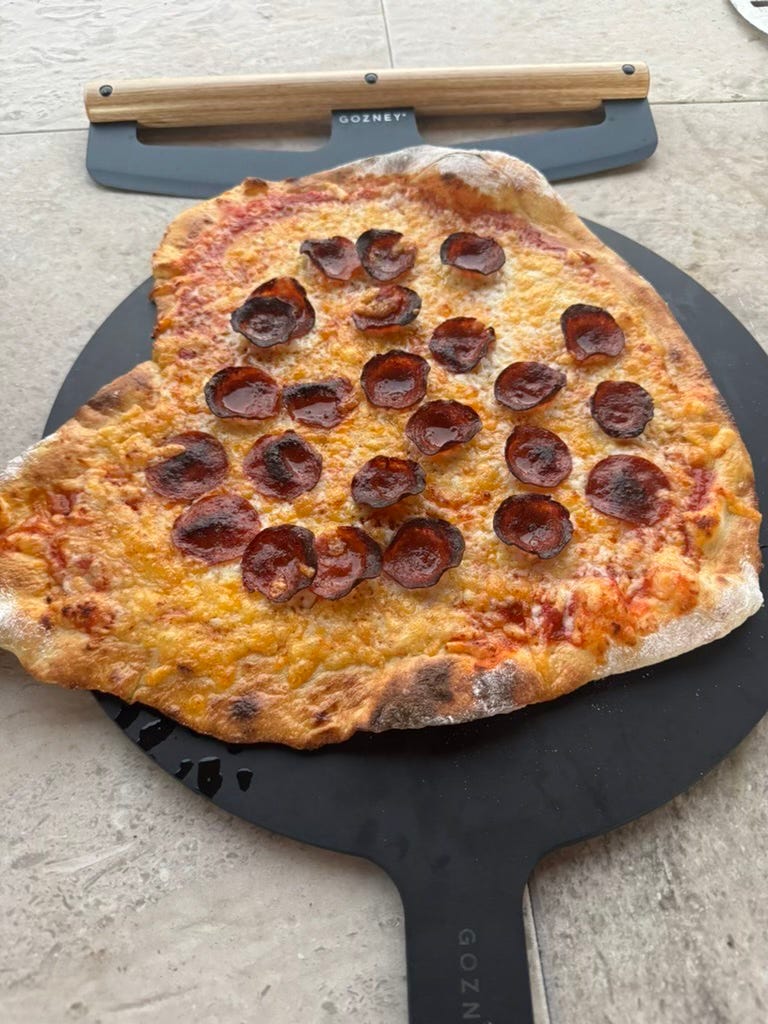
Sometimes I’ll nail a beautiful Maillard reaction on a steak. We’re talking perfect crust. But it’s under-seasoned and misses that punch that brings the beef alive. Other times, I’ll pull a pizza from the Gozney that tastes perfect but looks like a punctuation mark. Semi-colon pizza: delicious, funny-looking, and humbling.
When my family gives feedback, I’ve learned to rebase instead of defend.
Feedback doesn’t have to be the full story or even entirely right. It’s a data point. Accepting it, or at least considering it, keeps you honest and open to learning.
What’s funny is how often dishonesty disguises itself as protection. Most of us tell small lies to keep confidence intact, but all we’re really doing is slowing progress. Honesty might sting for a second, but it heals fast. Deception lingers.
The Monologues Nobody Asked For
Sometimes I’ll deliver a long, heartfelt monologue that I’m sure will be a breakthrough moment. But it doesn’t work out that way. It doesn’t land the way I’d hoped.
I do this with kids, family, friends, and sometimes co-workers. It comes natural to me. It’s part of who I am, and how I live in the world. I hear a question, I answer it, or strive to find the answer. But, sometimes, it turns out I didn’t even understand the question to begin with.
Those moments remind me to listen to understand, not to speak. It’s usually a good chance to dig in a little, ask questions, and invite them to tell me more. They teach me that curiosity is sometimes more valuable than answers alone.
That’s where intellectual honesty meets humility. It’s the discipline of pausing long enough to ask, “What’s actually happening here?” instead of assuming you already know.
The Things You’ll Never Wear
This principle doesn’t just apply to work or relationships. It applies to how you spend money, what you buy, and why.
There’s a difference between buying something because it serves a purpose and buying it because it looks impressive. Intellectual honesty is what helps you tell the truth about which category you’re in.
I’ve seen people buy designer clothes they never wear, cars they’re afraid to drive, and houses too big to feel like home. Not because they wanted those things, but because they wanted to be the kind of person who has those things. That’s ego, not intention.
The antidote is simple: be honest about what actually brings value to your life. Ask yourself whether the purchase serves you or whether you’re serving the purchase.
That’s the Intentional Luxury principle at work. Not avoiding luxury, but being truthful about whether it’s adding to your life or just adding to the performance of your life.

The Second Chance
A few months after that lost deal, I got another shot with the same customer on a different opportunity.
This time, I asked questions to understand before offering answers. I stopped trying to convince and started listening. The process felt slower, less heroic, almost anticlimactic.
But eventually, the customer articulated their own solution, the same outcome we wanted, but this time it was theirs. They believed in it. They drove it forward.
The deal closed smoothly, and the partnership deepened.
That’s what intellectual honesty gives you: speed to learn, freedom from blame, and the courage to see where you were part of the problem. The faster you own the truth, the faster you can improve.
The Side Nobody Talks About
Here’s the tension I’m still learning to navigate: I’m hard on myself, sometimes too hard.
The same honesty that drives improvement can also erode joy if it isn’t balanced with grace. Lately, I’ve been trying to practice a new kind of honesty. Being truthful about the good I’m doing too.
That’s harder than it sounds. I’ve built guardrails against arrogance, but sometimes they keep me from seeing what’s working. There’s a middle ground between self-satisfaction and self-denial.
Learning to see what’s good and to be grateful for it is the next evolution of honesty for me. Because ignoring progress isn’t humility. It’s another form of distortion.
What Began as a Blind Spot Eventually Became a Compass
At first, I was just trying to avoid mistakes. Then I started seeing patterns. Awareness built honesty, and honesty deepened awareness. It’s a feedback loop I’m still learning to navigate, but it’s changed how I work, parent, and live.
The hard part is that honesty rarely feels like strength in the moment. It feels like loss, like watching the version of yourself you thought was right dissolve in front of you.
But that’s where the real power lies: the willingness to see clearly, even when it stings.
The Final Test
The deeper I go, the more I realize this has never been about being right. It’s about being real.
Every truth makes me a little better. Every piece of feedback I accept without defense makes me stronger. And every time I pause to recognize what’s working, I feel a quiet kind of gratitude: for awareness, for the people who’ve modeled it for me, and for the chance to keep learning.
It’s taken decades to even start to get this right, and I’m still nowhere near done. But I’ve seen what honesty can do when it’s practiced with humility. It accelerates growth, deepens relationships, and builds a life that doesn’t need polishing.
Maybe that’s the final test of honesty: being able to look at your own reflection and see both the flaws and the progress without flinching at either.
A question for you: Where in your life are you telling small lies to protect confidence? Not dishonesty in the big, dramatic sense. Just the places where you’re avoiding a truth that might sting for a second but would help you grow faster.
Hit reply and let me know. I read every response.
— Stephen